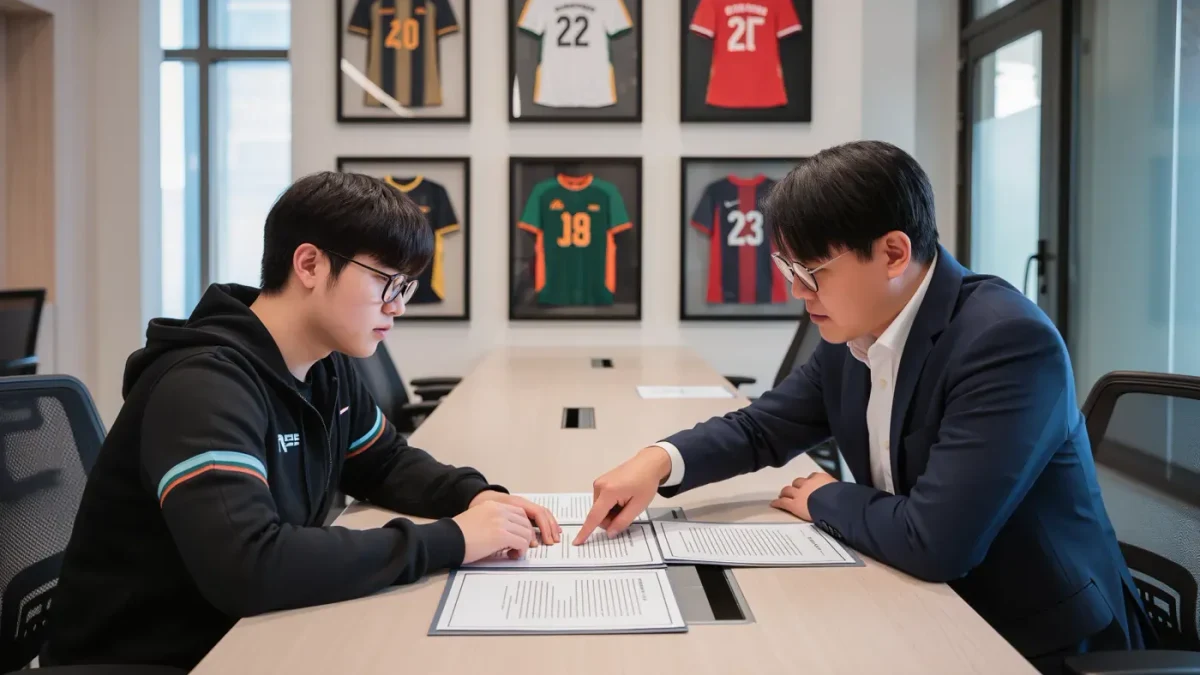
An esports player contract is an employment agreement, usually running one to three years, covering salary, tournament prize splits, buyout terms, streaming and content rights, and use of the player's name and image. At the professional level these deals can be worth seven figures; at the entry level they can be offered to players as young as their mid-teens with little guarantee of anything. This article is information, not legal advice — anyone signing a real contract should have it reviewed by a lawyer or a qualified players' association. What follows are the clauses that most often decide whether a deal turns out fair.
What are the core terms in a standard esports contract?
Five things. Salary, paid monthly, with a stated currency — essential when a team competes across borders. Term, meaning contract length, and how it renews or ends. Prize split, the agreed percentage of tournament winnings between player and organization. Buyout or transfer clause, which sets what another organization must pay to acquire the player. And duties: practice schedules, content obligations, exclusivity to one title, and behavioral clauses governing conduct and streaming. Everything else — housing, relocation support, visa sponsorship, health coverage — is negotiable, and the disparity between a tier-one contract and an academy contract is enormous.
How do buyouts and transfers actually work?
A buyout clause prices a player's release. When another organization wants a player under contract, it pays the release amount to the current team, and the teams negotiate from there. Buyouts protect the organization's investment in developing players, but they can also trap one: a long contract with a high buyout lets a team hold a player it no longer plays, which is why buyout amount, payment terms, and any player consent requirements deserve close reading. Unlike traditional sports with collective bargaining, esports has no universal transfer windows or minimum-release rules — the contract itself is the entire framework.
Who owns streaming and content rights?
Whatever the contract says, and this is where young players sign away the most value. Some contracts grant the organization rights to a player's likeness, highlights, and even a share of personal streaming revenue; others restrict what a player may stream — titles that compete with the team's game, hours that conflict with team content, or speech clauses covering criticism of the organization. Since a popular personal stream can out-earn a salary, treat streaming clauses as compensation: exclusivity and revenue-share terms should be priced into the deal, not accepted as boilerplate.
What happens when a team doesn't pay?
Non-payment and late payment have been recurring problems in esports, especially at lower tiers and during organizational collapses. Contracts differ on remedies, and enforcement across countries is slow — a player in one jurisdiction suing a company in another often waits years. Practical protections: keep payroll records and communications, prefer organizations in league systems with financial requirements (partner leagues vet their members), and know that some jurisdictions offer labor-law routes that are faster than contract suits. The esports industry's payment disputes and organization failures have been documented by outlets including BBC News.
How do visas and international play affect contracts?
They can decide a career. Rosters are international, so contracts commonly include relocation, and a player moving to a US-based team typically needs a P-1 athletic visa, which the sponsoring organization files for — US Citizenship and Immigration Services publishes the requirements for internationally recognized athletes. Visa timing affects roster locks and tournament eligibility, so contracts should state who handles sponsorship, who pays, and what happens to the deal if the visa is denied. A player stuck without a visa and with a live contract in a country they cannot work in is a real, recurring situation.
Do minors and parents need special caution?
Yes, and in most jurisdictions a contract with a minor is voidable — which cuts both ways, since organizations know it and may rely on renewal pressure instead. Parents of players under 18 should insist on: a written guarantee period for salary, education or tutoring provisions for players still in school, housing and guardianship arrangements spelled out if relocation is required, and an independent lawyer reading the buyout and image-rights clauses. Esports careers are short and peak early; a contract that controls a player's image and transfers for years while guaranteeing little salary is not an opportunity, it is an option on someone's career.
What should a player do before signing?
Four steps. Read the termination and buyout sections before anything else — they define the worst case, not the best. Get every verbal promise written into the contract; verbal roster and salary promises are worthless at signing. Have the document reviewed by someone independent — a sports lawyer, or associations like the CSPPA in Counter-Strike that review contracts for members. And compare the deal against the organization's payment record and league standing. Nothing in a contract matters more than whether the entity behind it can and will pay.
For more context, read How Esports Teams Make Money: Sponsorships, Revenue Shares, and Prize Pools.
For more context, read esports college scholarships.
For more context, read How Esports Betting Odds Get Approved and Set.