Cross-play — players on PlayStation, Xbox, PC, and Switch joining the same multiplayer match — went from a corporate standoff to a default feature in under a decade. Fortnite forced the door open in 2018, and today most major multiplatform titles, from Call of Duty to EA Sports FC and Minecraft, ship with it enabled. The complications moved underneath: whether your account progression carries across platforms (cross-progression), whether PC players get input-based advantages against controllers, and which games still keep their player pools separate. Here is the honest map of what works and what does not in 2026.
What has to happen technically for cross-play?
Three layers have to line up. The developer must run a unified matchmaking backend instead of separate per-platform servers — this is why support is per-game, not a console switch. The publisher must clear business terms with each platform holder, which was the historical blocker: Sony restricted cross-play with other consoles until the Fortnite backlash of 2018 pushed it into an open beta program that September. And players need an overlay account from the publisher — an Epic account, an Activision account, a EA account — that exists above the PlayStation Network and Xbox identities so the game knows who you are on any device. That overlay account is also what carries progression; without linking it, your PlayStation save and your PC save are strangers.
What is the difference between cross-play and cross-progression?
Cross-play means playing together; cross-progression means your unlocks, rank, and purchases follow you between platforms. They are separate features, and games support them separately. A title can have full cross-play with no cross-progression (your friend list works, your skins do not travel), or full cross-progression where one account carries everything but console pools stay separate. The practical checklist before buying a game on a second platform: confirm both features, link your publisher account to each platform identity before you start, and check whether purchased in-game currency is shared — currency and DLC are the items most often restricted to the platform where they were bought, which is a deliberate policy, not a technical limit.
Does cross-play create fairness problems?
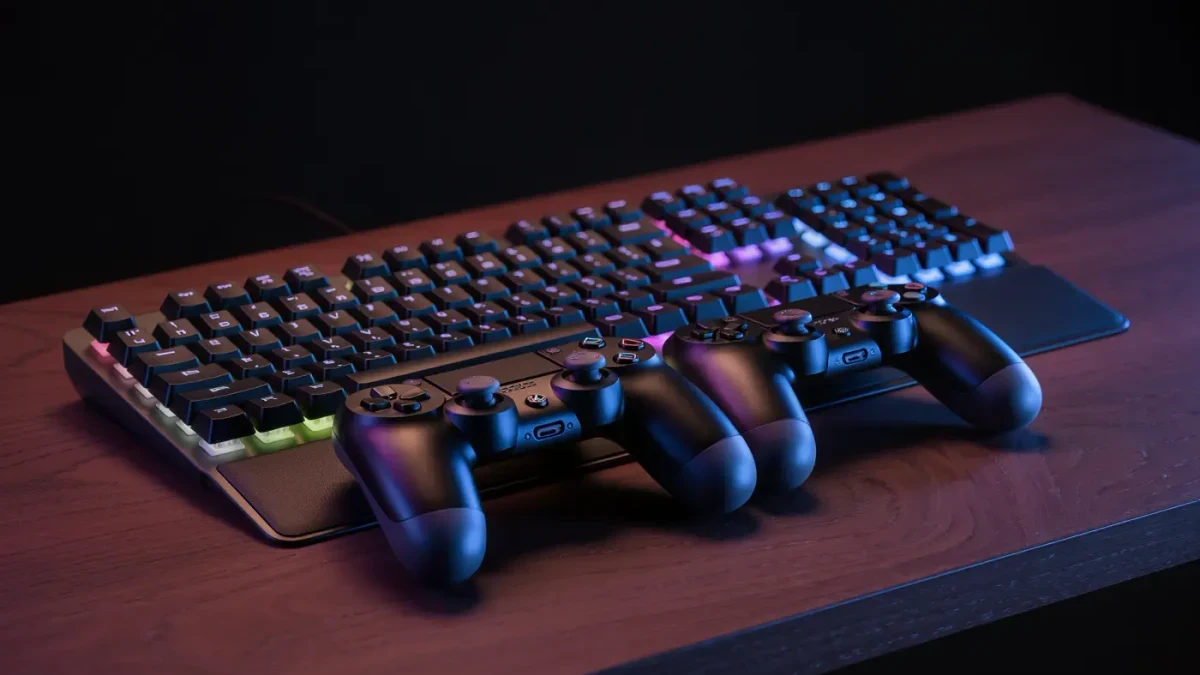
In shooters, yes, and the industry's answer is input-based matchmaking. Keyboard-and-mouse aiming is faster and more precise than a controller in most shooters, so games like Fortnite and Call of Duty pool players primarily by input, mixing PC and console only when controllers are involved, or placing controller users together regardless of machine. Console players can usually disable cross-play entirely in system or game settings — at the cost of longer matchmaking queues in less popular titles. Aim assist on controllers is the counterweight that keeps the debate alive: it is strong enough in some games that top controller players compete with mouse players at the highest level, and tuning it is a permanent controversy. None of this is hidden — the settings exist, and using them is the fair-play equivalent of adjusting your seat before driving.
Which games and platforms still do not connect?
A shrinking list, but a real one. Some games separate PC from consoles deliberately for fairness or because of anti-cheat architecture. Some older titles never received the backend work and never will. And the platform-side rules are not symmetrical: a PlayStation Network account and a Microsoft account must be linked through the game's own systems, cross-game party chat across Xbox and PlayStation does not exist at the system level — voice chat happens inside each game that builds it — and platform-specific stores do not transfer purchases. Nintendo's ecosystem joins the same cross-play systems for major third-party games, but first-party online features are Nintendo-only. If a friend group spans platforms, the game's own support page, not the console's marketing, is the source of truth for what connects.
How should a cross-platform friend group set up?
Four steps, in order. Agree on the game first and check its cross-play and cross-progression status on the publisher's support documentation. Everyone creates or links the same publisher overlay account on their platform before the first session — doing it later can strand early progression on a local account. Use the game's internal friends list, built on those overlay accounts, rather than console friend lists, which do not cross the divide. Finally, decide input settings as a group: if one member is on mouse and keyboard and the rest are on controllers, input-based matchmaking may split you in ranked modes, and knowing that before the session saves an evening of confusion.
Where is cross-play headed?
Toward boring, which is success. Microsoft's strategy since 2024 — day-one PC releases and select first-party games on rival consoles — assumed cross-platform accounts as the norm. Sony's live-service titles launch with full cross-play and cross-progression by default. The remaining friction is account complexity and store lock-in, not technology. For players, the trend reported across games-industry coverage at outlets like Reuters technology means the 2018 question "can we play together?" is being replaced by the 2026 question "why can't my purchases come with me?" — and that one is answered policy by policy, game by game.
For more context, read Console Exclusive vs. Multiplatform Games: Why the Split Changed in 2026.
For more context, read game pass vs playstation plus.
For more context, read backward compatibility consoles.